

We all know the comforting heft of a thick cotton rope basket overflowing with throws in the living room. It’s soft, it’s inviting, and it hides a multitude of sins when company arrives. But transporting that same mentality directly into the bathroom is a rookie mistake.
The bathroom environment is hostile. It is a zone of fluctuating temperature and intense humidity. In my eight years analyzing home organization products, I’ve seen beautiful baskets turned into havens for mold because they were the wrong material in the wrong spot. A basket intended for bathroom towels isn't just a container; it’s a micro-environment that either preserves your linen’s freshness or accelerates its decline.
Finding the right bathroom towel basket ideas requires moving beyond a single aesthetic, and considering the multiple attributes of a space. Whether you are curating a high-end guesthouse experience, battling the constraints of a studio apartment, or simply a homeowner who demands visual tranquility, the basket you choose dictates the functionality of your bathroom. This isn't about tossing towels in a bin. It's about selecting a breathable, durable, and architecturally appropriate storage solution.
The Material Audit: Why Texture and Breathability Win
The primary failure point for most bathroom storage is trapped moisture, bathroom towel storage is no exception. A damp bath sheet thrown into a solid plastic bin is a petri dish waiting to happen! The superior approach involves materials that inherently allow air circulation. Through rigorous testing of various weaves and fibers, I have found that natural wickers and specific textiles offer the best balance of structural integrity and necessary ventilation.
The Real Wicker Storage Basket: Breathability is Non-Negotiable

When I refer to a wicker storage basket, I am not talking about the brittle, painted faux-wicker that cracks after a year. I mean genuine woven fibers—rattan, willow, or robust seagrass. These materials have dominated bathroom design for decades not just for their "spa" aesthetic, but because their woven construction creates hundreds of tiny air vents.
For family members who value aesthetics, wicker offers undeniable warmth. It counters the clinical coldness of subway tile and porcelain. However, placement is critical. I always advise clients to keep natural wicker off the floor if there’s any risk of standing water. A footed wicker basket, or one placed on a low shelf, ensures the bottom doesn't become a moisture trap. If you are aiming for a "Japandi" or organic modern look, a large, chunky-weave wicker basket holding rolled bath sheets is practically unbeatable for visual texture.
Cotton Rope: The Soft Power of Washability

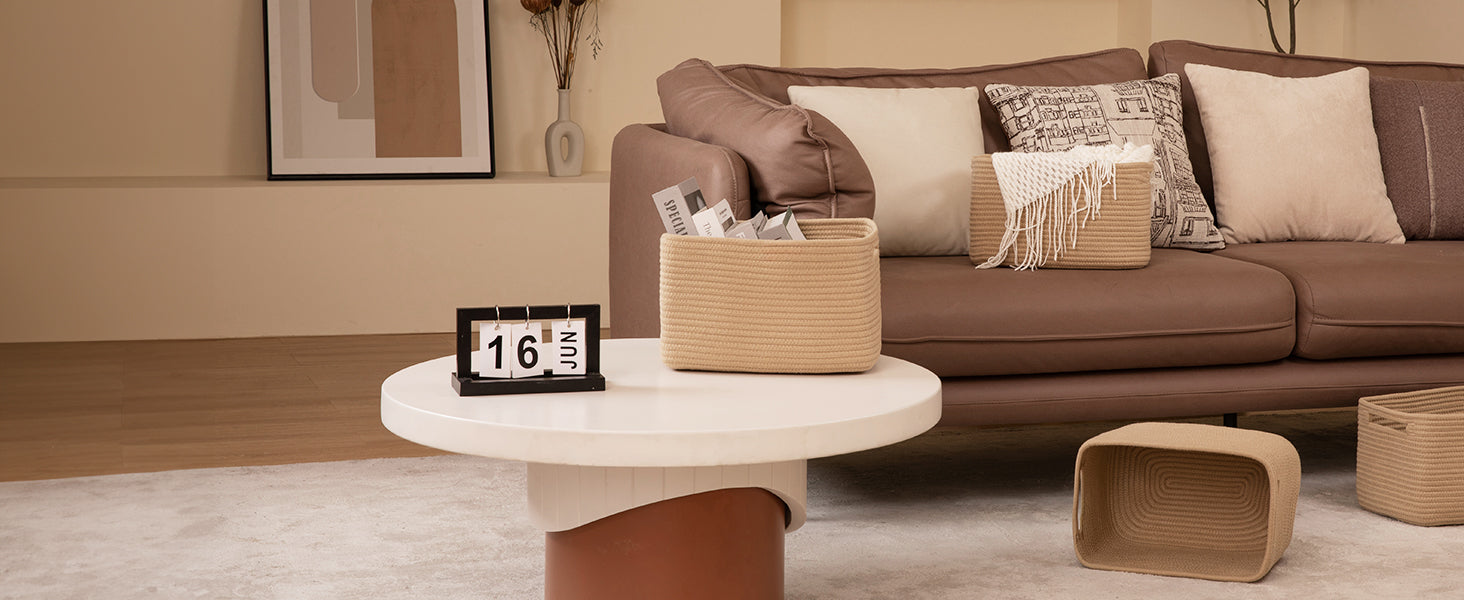
Cotton rope baskets have exploded in popularity, and for good reason. They offer a softness that rigid wicker cannot match, making them ideal for storing delicate face cloths or high-thread-count hand towels that you don’t want snagged on a rogue piece of rattan. They are pliable, forgiving in tight corners, and safe for households with toddlers who might scratched over a rigid container.
However, for practical homeowners, the real advantage of cotton rope lies in its ease of cleaning. Unlike wicker, which requires careful vacuuming and salt-water wipe-downs, a high-quality cotton rope basket can often be thrown in the washing machine on a gentle cycle. This is a massive benefit in a bathroom setting where hairspray residue and dust accumulate quickly. If you choose cotton, opt for a tight, heavy coil weave; cheap, loose weaves will slump over into a sad puddle once the towels are removed.
The Paper Rope Basket Paradox: Eco-friendly but High Maintenance
Paper rope, often twisted Kraft paper woven onto a wire frame, is a polarizing material in my analysis. Visually, it’s stunning. It offers a uniform, sleek appearance that rivals expensive Loom wicker at a fraction of the cost, appealing to interior design enthusiasts looking for a clean, minimalist line. It is lightweight and often made from recycled materials, checking the sustainability box.
However, its fatal weakness is that it is afraid of water. While many paper rope baskets are treated with a light lacquer, they are fundamentally intolerant of being soaked. They cannot be placed near a shower spray zone. I recommend paper rope strictly for "dry" towel storage—clean, folded towels waiting for use on a high shelf—rather than as a hamper for damp towel, used linens. It’s a beautiful choice, but one that demands disciplined placement.

Spatial Deployment: Ideas for Every Spatial Challenge
Once you’ve selected the material based on your humidity tolerance and maintenance preference, the next challenge is integration. A basket placed thoughtlessly is just clutter. A basket placed strategically is design.
The Small Space Dweller's Hack: Verticality and Over the Toilet Storage

In urban apartments, floor space is gold dust. If you sacrifice two square feet for a large floor basket, that would be a great pity. Small space dwellers must look up. The area above the commode is often the most underutilized cubic footage in the entire home.
Implementing smart over the toilet storage ideas usually involves floating shelves or an etagere unit. Here, the basket selection must be precise. You don't want deep, cavernous baskets where towels get lost at the bottom. Instead, opt for shallow, rectangular wicker or wire-frame baskets that fit flush against the wall.
I recently provided consulting services for a friend's small guest bathroom, low-profile wicker basket on shelves above the toilet. Each held three tightly rolled hand towels. It turned dead space into a focal point and kept the towels easily accessible without encroaching on the limited standing room.
The Boutique Hotel Touch: Curating the Guest Experience
Guesthouse owners and boutique hotel managers know that guests judge accommodation by the bathroom. The presentation of towels is a subconscious indicator of cleanliness and luxury. Dumping folded towels on a rack feels utilitarian; presenting them in a curated basket feels intentional.
The industry standard trick here is the "spa roll." Rolling towels tightly and standing them vertically in a medium-sized, rigid wicker basket makes them easy for a guest to grab without disrupting the whole pile. It also allows you to fit more inventory into a smaller footprint.
If you want to create a more upscale feel, I advise hospitality clients to create "towel zones." A small, finely woven cotton basket on the vanity for washcloths, and a larger, structured wicker basket near the shower for bath sheets. This separation of functions elevates the user experience from merely drying off to engaging in a ritual.

The DIY Enthusiast's Domain: Customization and Color
For the DIY expert or the homeowner with a very specific color palette, off-the-shelf baskets can feel limiting. This is where customizing base materials comes into play. Cotton rope baskets are incredibly receptive to fabric dyes. I’ve seen incredible ombre effects created by dip-dying the bottom half of a white rope basket in indigo, anchoring a coastal-themed bathroom perfectly.
If you find a vintage wicker piece with great bones but a tired finish, a matte spray paint tailored for plastics and wicker can revitalize it. A charcoal grey wicker basket against a white marble bathroom is a striking modernist statement. However, ensure the paint is fully cured and sealed before introducing textiles to avoid color transfer onto your best cotton towel.
Ultimately, the best bathroom towel basket is the one that acknowledges the reality of its environment. It respects moisture, optimizes space, and looks good doing it. Don't settle for a plastic bin. Your towels deserve better.